Journal · 17 November 2026 · wedding planning · Wedding Tips
Wedding trends 2027: the UK forecast, checked against the data
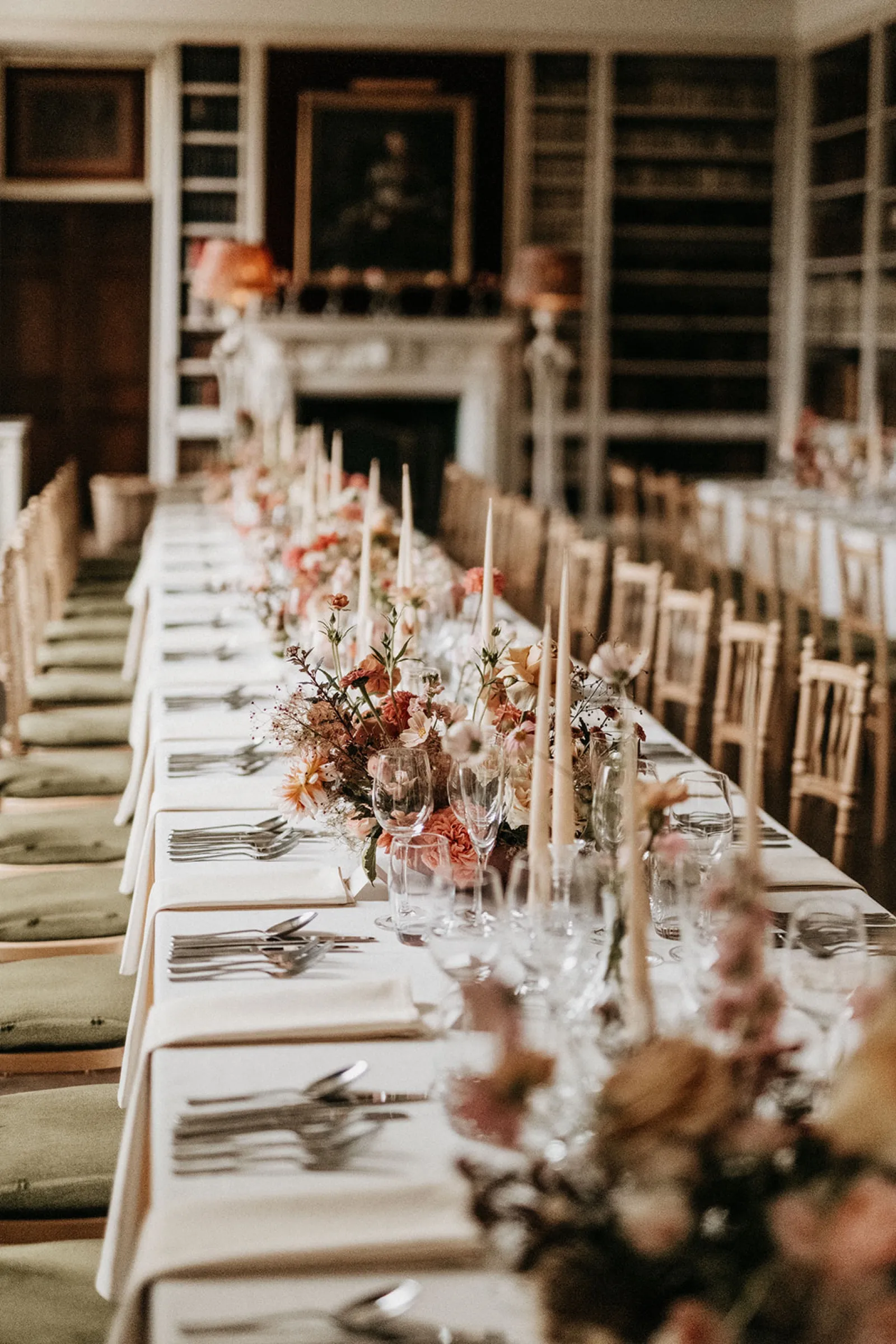
Every year the wedding internet publishes its trend lists. Most are mood boards with a year stuck on the front. This one is built differently. I’ve taken the five biggest 2027 forecasts, checked every claim against hard numbers from UK couples, and added what nearly 1,000 weddings since 2002 have taught me about which trends last and which ones date your photographs.
The short answer
UK weddings in 2027 will be more private, more personal and longer. Couples are cutting guest lists and spending more on each guest. The look is warm and Italian (butter yellow, terracotta, long tables, aperitivo), flowers are wild and English-grown, the cake is turning into a dessert tower, and the wedding is stretching into a weekend. Sage green, naked cakes and lace gowns are fading. The average UK wedding costs between £20,604 and £21,990 depending on whose survey you read, and that figure has barely moved since 2024.
The 5 questions couples are asking about 2027 weddings
What are the biggest wedding trends for 2027?
The biggest UK wedding trends for 2027 are private weddings with smaller guest lists, playful personal details (“whimsy”), wedding weekends, an Italian-inspired look at British venues, butter yellow and warm palettes, wild English-grown flowers, dessert towers instead of cake, two outfits in one day, dry hire venues and a sharp rise in spending on wedding film.
What is the wedding colour of 2027?
Butter yellow. It was the colour of 2026 and is still climbing, with UK searches up 138% year on year. Around it sits a warm 2027 palette of lemon, terracotta, tomato red, rust, burnt sienna and fig. Sage green, the colour of the early 2020s, has lost around four-fifths of its search interest.
How much does a wedding cost in the UK in 2027?
The latest figures put the average UK wedding at £20,604 (Bridebook 2026) to £21,990 (Hitched 2026), excluding ring and honeymoon. Costs have barely moved since 2024, so expect a 2027 average of £20,000 to £22,000. London averages nearly £27,000; the North West around £17,300.
Are small weddings still popular in 2027?
Yes, and growing. 41% of UK receptions now have fewer than 60 guests, and registry office weddings rose to 12% in 2025. Smaller doesn’t mean cheaper per head, though: couples spend £303 to £311 per guest at 50 to 70 guests, against £225 at 100.
Do we need a videographer as well as a photographer?
More UK couples are deciding yes. In 2026 they spent more on film (£1,514 on average) than on photography (£1,484), with film spend up 9% in a year. Photographs give you the moments to frame; film keeps the voices, vows and speeches. Booking both together, as one plan, is the simplest way to keep the whole day. See how Fusion works.
2027 wedding trends at a glance
- The private wedding
- Whimsy: personality over polish
- The wedding weekend
- Italy, without the flight
- Butter yellow and the warm palette
- Meadowcore and English-grown flowers
- Dessert towers replace the naked cake
- Aperitivo hour and the late-night menu
- Two looks, one day
- Sculptural shapes and romantic beauty
- Dry hire and unconventional venues
- The multisensory wedding
- Celebrant-led ceremonies (and a law change)
- Cinematic, editorial and analogue memories
- Shorter engagements, busier summers
Key numbers for 2027
- £20,604: average UK wedding cost in 2026 (Bridebook, about 7,000 couples). Hitched puts it at £21,990 (2,020 newlyweds).
- 41% of wedding receptions now have fewer than 60 guests (Bridebook, 2026).
- 12% of UK weddings were at a registry office in 2025, up from 9% in 2024 (Bridebook).
- 1 in 5 couples now marry within 12 months of getting engaged (Bridebook).
- +138%: year-on-year rise in UK searches for “butter yellow”, to 91,000 in a month (Bridebook).
- −81%: fall in monthly UK searches for sage green since its January 2022 peak (my calculation from Bridebook data).
- £1,514 vs £1,484: average spend on a videographer versus a photographer in 2026. Film has overtaken photography (Bridebook).
- 63% of respondents planned to wear more than one outfit (The Wedding Edition 2027 white paper).
How I built this forecast
I read the five most-cited 2027 trend reports, published between April and October 2026:
- Bridebook Wedding Trend Forecast 2027 (UK). Three years of UK search data, plus a Trend Council of planners, florists, celebrants and designers.
- The Knot 2027 Wedding Trends Report (US). 20 trends built from US couples’ behaviour on The Knot up to June 2026, vetted by a five-person vendor council.
- The Wedding Edition 2027 Trends Talk (UK luxury). A panel at Pavilion Club, Knightsbridge, in September 2026, with a white paper behind it.
- Easy Weddings: wedding trends to watch for 2027 (Australia). Built on real weddings it featured through 2026.
- TheWed: 13 trends on their way out for 2027 (international). The “what’s leaving” view.
Then I checked each trend against UK numbers from Bridebook’s UK Wedding Report 2026, the Hitched Wedding Industry Report and Savills’ wedding venue research. A trend made this list only if it had UK evidence behind it, or a strong signal from the UK planners and suppliers who’ll actually deliver these weddings. US-only trends go in a separate watch list, because what goes viral in Brooklyn doesn’t always get booked in Gloucestershire.
What I can add that a survey can’t: I’ve photographed and filmed nearly 1,000 weddings since 2002, mostly across the Cotswolds, London and Europe. So for every trend, there’s a note on what it actually means on the day, and for your photographs and film.
1. The private wedding
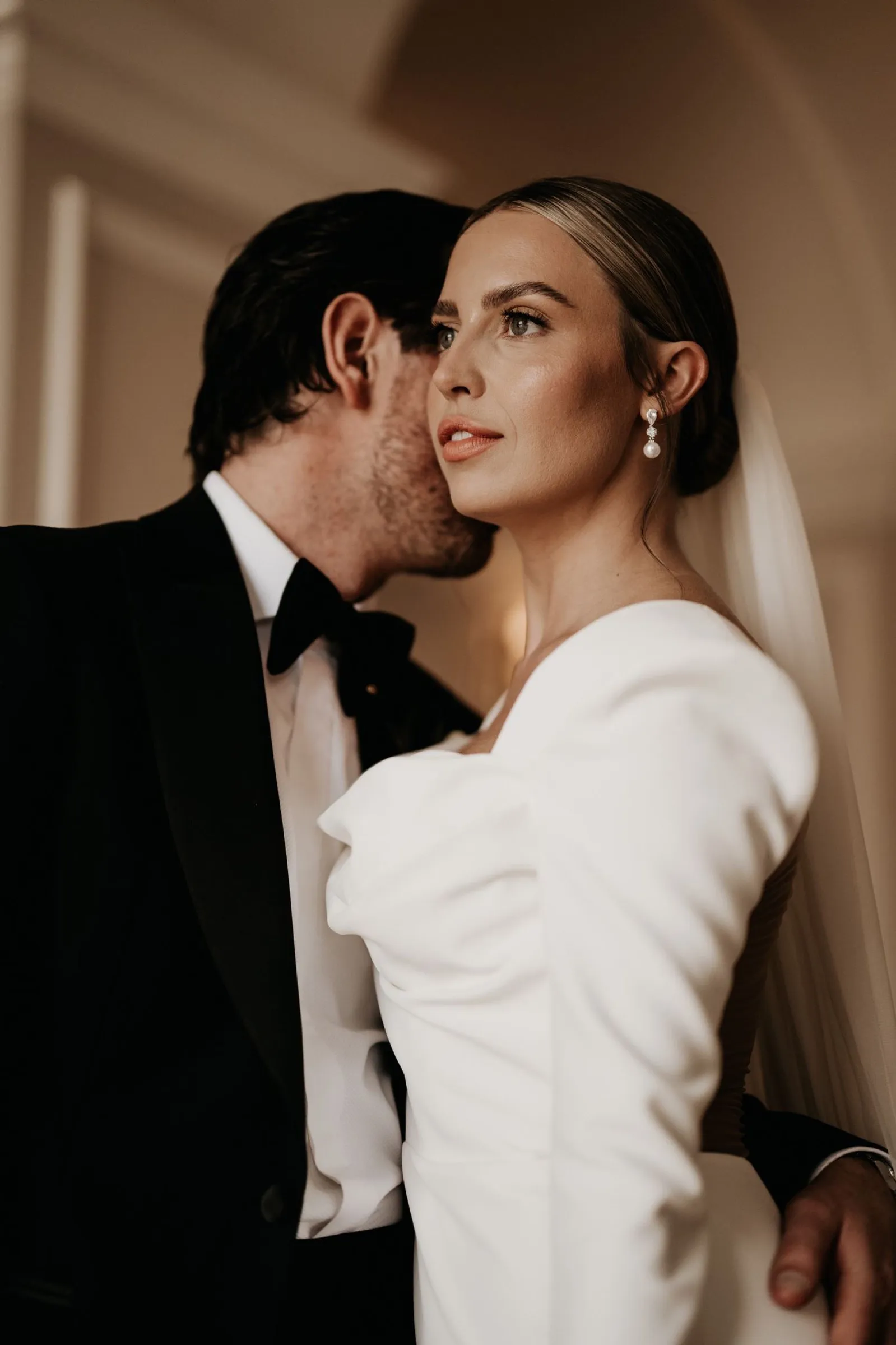
A private wedding is a celebration built on a smaller, trusted guest list, with phones put away during the ceremony and, at the top end, NDAs for guests and suppliers. Bridebook calls it the trend of 2027, and the numbers back it up.
- 41% of receptions now host fewer than 60 guests (Bridebook, 2026).
- Registry office weddings rose to 12% of UK weddings in 2025, from 9% the year before. Elopement searches have more than doubled since 2022.
- Celebrant Nat Raybould reports intimate guest lists of 30 to 45 becoming normal.
- Celebrity planner Mark Niemierko puts it plainly: “By 2027, I expect weddings to become even more private.”
This isn’t about money. The average spend is still over £20,000. It’s couples deciding the guest list should serve them, not their parents’ Christmas card list.
What it means on the day. When phones go away, the only record of your ceremony is the one you hire. That raises the stakes on choosing a photographer and filmmaker who can work quietly, because a private wedding with a loud supplier isn’t private. The upside is huge: no forest of iPhones in the aisle shot, and guests who actually look at you. If you go unplugged, tell guests why on the invitation and promise them a gallery link.
If you’re going smaller, my guide to planning a micro wedding and the registry office wedding guide are good next reads.
2. Whimsy: personality over polish
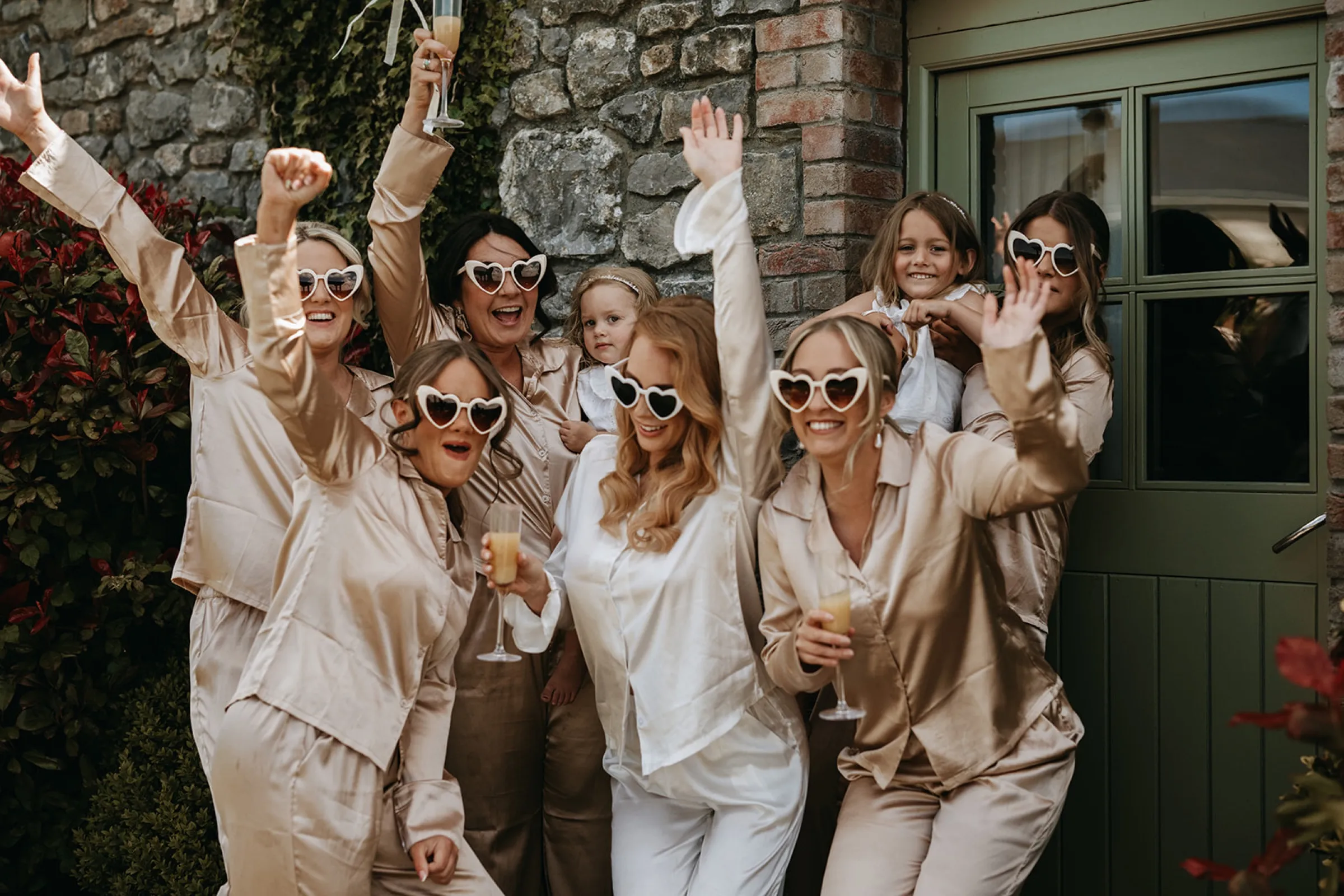
Whimsy is Bridebook’s hero trend for 2027: small, playful, personal details replacing formality. Think handwritten doodles on the stationery, secret-garden flowers, a Campari Spritz where the prosecco used to be.
Pinterest searches for whimsy weddings are up 1,000% year on year, and “whimsy doodles” up 1,500%. Interestingly, The Knot only measured an 8% rise for whimsical florals in the US, which suggests the UK is further down this road than America.
What it means on the day. Whimsy photographs beautifully when it’s genuinely yours and like a theme party when it’s borrowed. The best test I’ve heard came from Matthew Shaw of Sauveur Studios at The Wedding Edition’s trends talk: before you add anything, ask “does this represent us?”
3. The wedding weekend
A wedding weekend stretches the celebration across two or three days: welcome drinks or a pizza night, the wedding itself, then a recovery brunch or a lazy pool day.
It’s the pick of Bridebook’s Trend Council for 2027. Venues such as Bunny Hill report couples booking extra nights, The Knot lists “extending the wedding” among its 20 trends, and Easy Weddings sees destination couples turning weddings into multi-day retreats. Savills names on-site accommodation as one of the things that now sets a venue apart.
What it means on the day. The night before is often where the most relaxed pictures of a wedding live: everyone has arrived, the nerves haven’t. You rarely need a second full day of coverage. Two hours at the welcome drinks costs a fraction of that and gives your gallery and film an opening chapter. Mention it early, because it affects availability on the days either side. Ask me about weekend coverage.
4. Italy, without the flight
Bridebook’s one to watch for 2027 is the Italian aesthetic recreated at British venues: lemon trees in terracotta pots, long tables dressed in linen, aperitivo on the lawn.
The US data points the same way. The Knot reports searches for coastal Italian “beach club” weddings up 315% year on year, and Italian-themed suites up 167%. Meanwhile, Bridebook notes UK searches for vineyard weddings are cooling. Couples want the feeling of Italy, not necessarily the logistics.
What it means on the day. This look lives or dies on light. Long outdoor tables in the Cotswolds work from late May to early September, and in June the sun doesn’t set until after 9pm, which is a gift for evening portraits. Always have a wet-weather plan that keeps the long table (a barn, or a marquee with the sides rolled up). And if you’d rather have the real thing, here’s my expert guide to planning a wedding in Italy.
5. Butter yellow and the warm palette
Butter yellow, a soft, creamy yellow, was the colour of 2026 and is still climbing into 2027.
- UK searches for “butter yellow” hit 91,000 in a single month, up 138% year on year.
- Searches for “butter yellow wedding” rose 417% in three months.
- Around it, Bridebook sees a warm “Italian terrace” palette forming: lemon, terracotta, tomato red, rust, burnt sienna and fig.
The TikTok trap. Chartreuse and burgundy dominate WeddingTok, yet UK searches for chartreuse weddings are close to zero. There’s a gap between what goes viral and what gets booked. Plan for the booked version.
What it means on the day. From behind a camera, soft warm colours are kind. They bounce gentle, flattering light back onto faces, where a saturated yellow or green can cast colour onto skin. Butter yellow also reads beautifully on film in low evening light.
6. Meadowcore and English-grown flowers
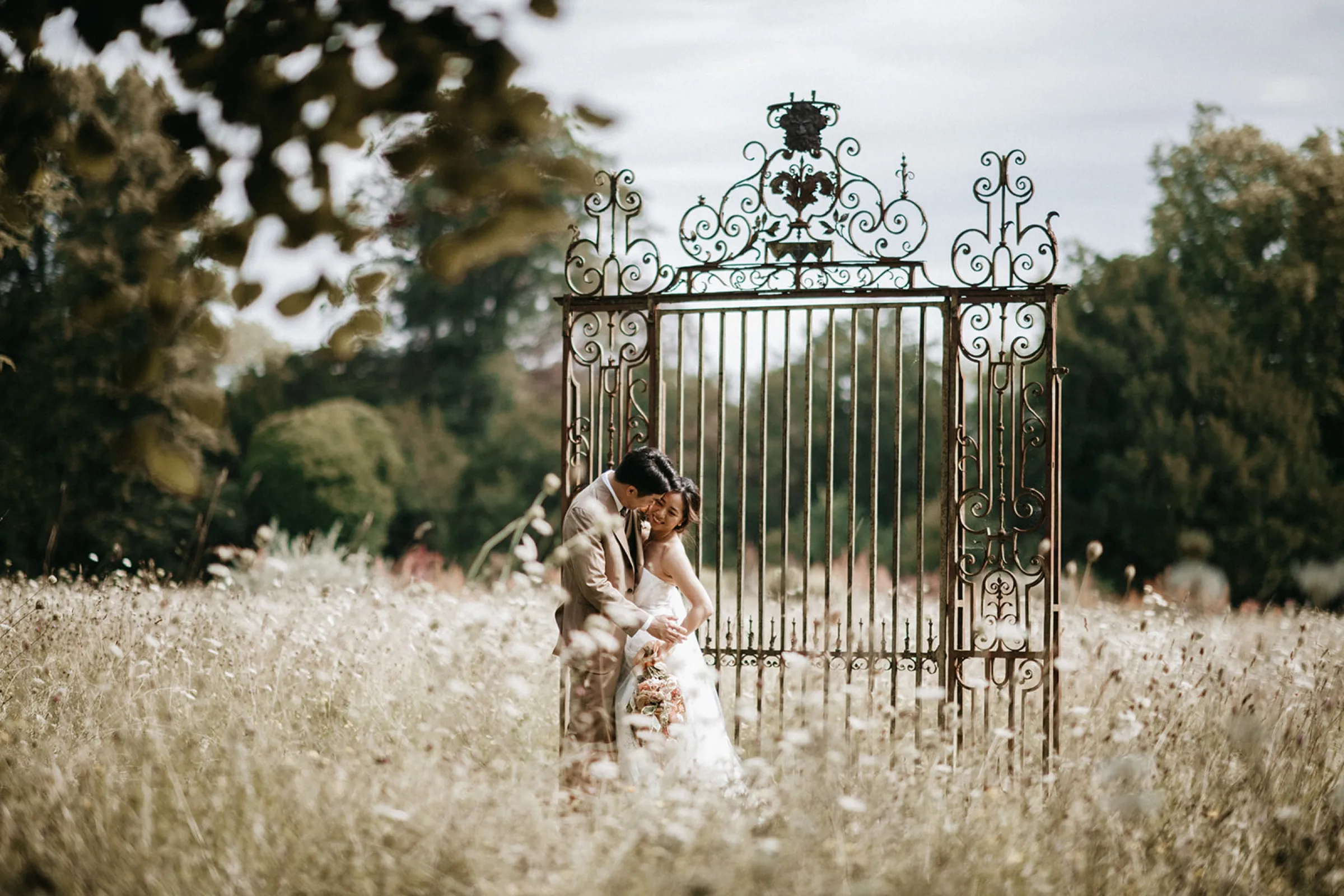
Meadowcore means loose, wild-looking flowers: meadow-style aisles, floral tunnels and prairie planting instead of tight, formal arrangements.
UK searches for “wildflower wedding” are up 66% in 12 months, now above 28,000 a month, and Pinterest searches for flower installations have nearly tripled. Florist Amelie Clemson of Lavender Green Flowers describes the 2027 mood as lighter, airier and Austen-inspired, with a strong lean to English-grown stems. In the US, The Knot sees single-flower “monofloral” installations up 113%.
What it means on the day. A meadow aisle is one of the most beautiful things to photograph and film, especially when grasses move in the wind. Ask your florist to keep the end of the aisle clear, so the walk back can be shot straight on without a hedge of cow parsley in front of your faces.
7. Dessert towers replace the naked cake
The naked cake is finished. Its replacement is height: tiramisu towers, profiterole pyramids, macaron stacks and the occasional croquembouche, plus retro, maximalist celebration cakes with sugar flowers.
Naked cake searches have roughly halved from their 2022 peak. Pinterest searches for tiramisu towers are up 700%. Cake maker Nina Rogers notes growth in dessert displays and sugar flowers, while warning that expectations are rising faster than budgets. The Knot sees the same playfulness in the US, with interactive food and drink up 66%.
One caution: TheWed lists the croquembouche itself as on its way out. More on that in where the forecasters disagree.
8. Aperitivo hour and the late-night menu
Aperitivo hour replaces the standard drinks reception with negronis, spritzes, olives and good bread, and a proper non-alcoholic option. Campari Spritz searches rose 170% in three months.
Later on, the evening buffet is giving way to gourmet toasties, taco trucks and espresso martini bars. Savills notes informal options like food trucks are winning on atmosphere, choice and cost control. At The Wedding Edition’s talk, Holly Congdon of Lettice Events described menus that mean something to the couple and take food waste seriously.
What it means on the day. Aperitivo is relaxed by design, which makes it the best hour of the day for natural photographs. Time it for when the light starts to soften and you get the reportage and the golden glow at once.
9. Two looks, one day
More couples now plan one look for the ceremony and another for the party, often through convertible gowns with detachable skirts, sleeves or overskirts.
More than 63% of respondents to The Wedding Edition’s 2027 white paper planned to wear more than one outfit. Bridebook reports convertible and detachable-skirt searches growing since 2023, and Hitched saw searches for after-party dresses up 50% in its 2026 report.
What it means on the day. Build the change into the timeline (20 minutes is plenty) so it doesn’t eat your portrait time. Then grab five minutes of portraits in the second look while the light is still good. Couples often forget, and it’s the outfit they chose purely for themselves.
10. Sculptural shapes and romantic beauty
Bridal fashion for 2027 is about shape: exaggerated skirts, sculpted drop waists and architectural draping, finished with Juliet cap veils, birdcage or micro veils and long pearl drop earrings.
Beauty is moving the other way from sculpted: flushed cheeks, windswept hair and a romantic, Austen-and-Brontë mood. The town hall look keeps growing too. Dua Lipa and Callum Turner’s May 2026 wedding at Old Marylebone Town Hall, with a white skirt-and-blazer set and a wide-brimmed hat, made the registry office feel like the chic option rather than the cheap one. The bridal suit is now an established choice rather than a novelty, which is why searches for it have settled.
What it means on the day. Volume needs space. A sculptural skirt in a narrow corridor looks like a duvet in a lift. Pick portrait locations with room around you.
11. Dry hire and unconventional venues
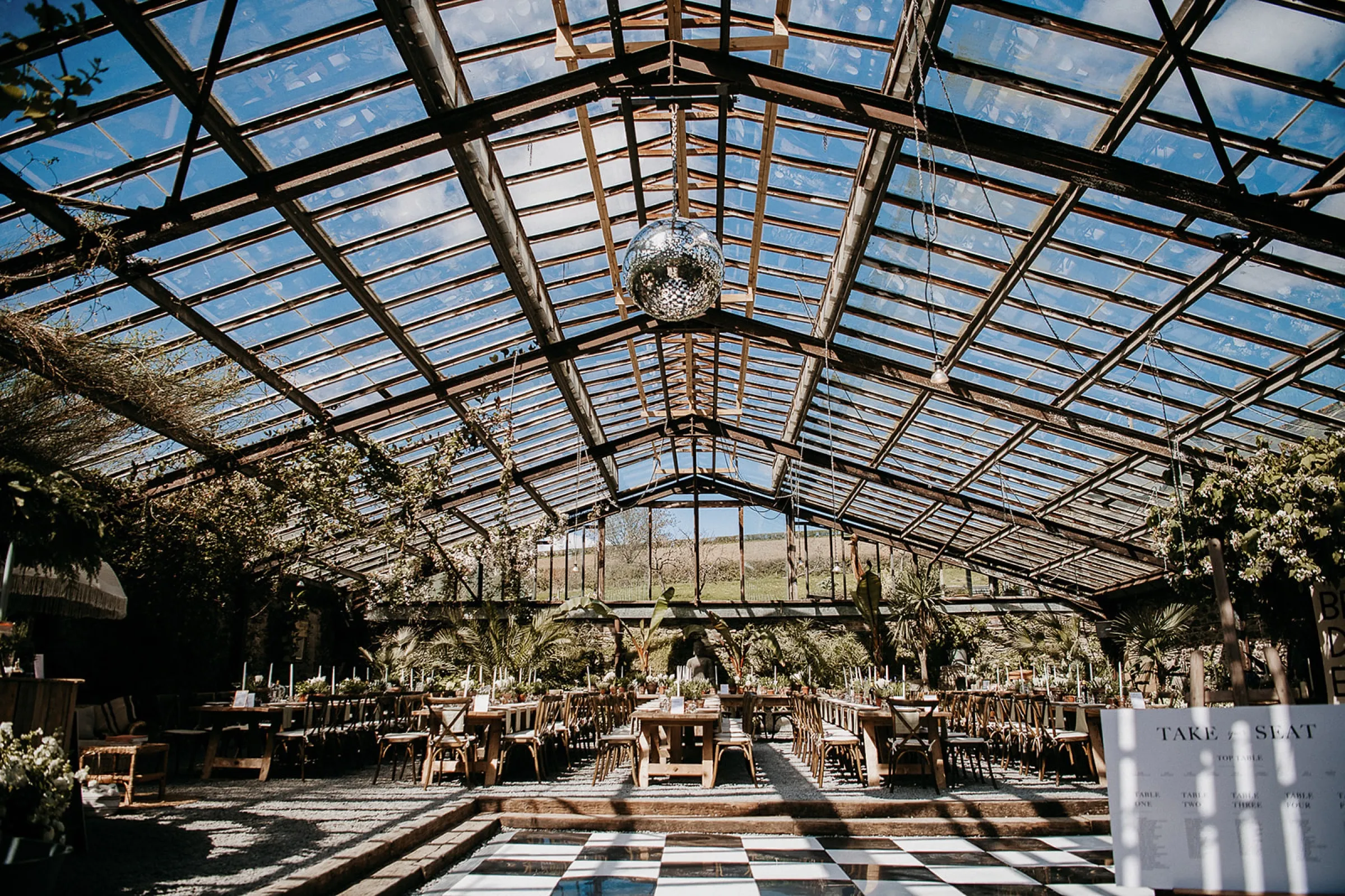
A dry hire venue rents you the space and nothing else: you bring your own caterers, bar, furniture and team.
UK searches for dry hire venues reached 2,000 in June 2026, up 188% year on year. Unconventional venues were the top-ranked trend in The Wedding Edition’s 2027 white paper, chosen by 37.9% of respondents. The Knot sees the same pull in the US. Savills adds that 31% of couples say outdoor space set their chosen venue apart, and 72% won’t even contact a venue unless pricing is on its website.
What it means on the day. Dry hire gives you total control and total responsibility. Somebody has to run the day, and it shouldn’t be your mum. Katrina’s guide to on-the-day wedding coordination explains what that job involves. Unusual venues can also be dark, so ask your photographer and filmmaker to see the space, or photos of it at your ceremony time, before the day.
Choosing a venue
Venue coordinator or on-the-day coordinator? When you’re looking at venues, ask what their coordinator actually does on the day. It’s not the same job.
- A venue coordinator works for the venue. They know the building, its rules and its own team, and they look after the venue’s side: the rooms, its catering and its timings. Many look after more than one event, and some aren’t with you from start to finish.
- An on-the-day coordinator works for you. They take over in the final weeks, confirm every supplier, build your timeline, then run the whole day, from the first delivery to the last taxi, so nobody in your family has to.
At a dry hire venue there’s usually no venue coordinator at all, so you’ll need one. Even where the in-house team is brilliant, an on-the-day coordinator looks after everything outside their remit: your suppliers, your timings and your people.
Katrina Seear, my partner, is an on-the-day wedding coordinator in Gloucestershire and the Cotswolds. If you’d like to know exactly what she does, she’s written it up: what does an on-the-day wedding coordinator do?
12. The multisensory wedding
The multisensory wedding is designed to be smelt, tasted and heard as well as seen.
At The Wedding Edition’s talk, Emma South of Jo Malone London talked through scented invitations, veil mists, candles and engraved fragrance bottles for guests. Bridebook reports couples choosing signature wedding scents, and The Knot sees “experiential stationery” up 77% in the US. Plantable menus that grow into wildflowers are appearing too.
What it means on the day. You can’t photograph a smell. You can film someone noticing it, and you can keep the sound of the day: the vows, the speeches, the laugh you’d forgotten. That’s why my films keep the sound in.
13. Celebrant-led ceremonies (and a law change)
Celebrant-led ceremonies are now completely normal in the UK, and 2027 brings more participation: readings written by a group of friends, ring-warming where the rings pass through every guest’s hands, and ceremonies that break the old rules on purpose.
There’s a legal twist worth knowing. In England and Wales, humanist and independent celebrant ceremonies still aren’t legally binding on their own, so couples complete a short legal ceremony separately. In July 2026 the Ministry of Justice opened its Tying the Knot consultation, proposing to let humanists conduct legally binding weddings for the first time. It closed on 24 September 2026. Until the law actually changes, plan for the separate legal step. In Scotland, humanist weddings have been legal since 2005.
14. Cinematic, editorial and analogue memories
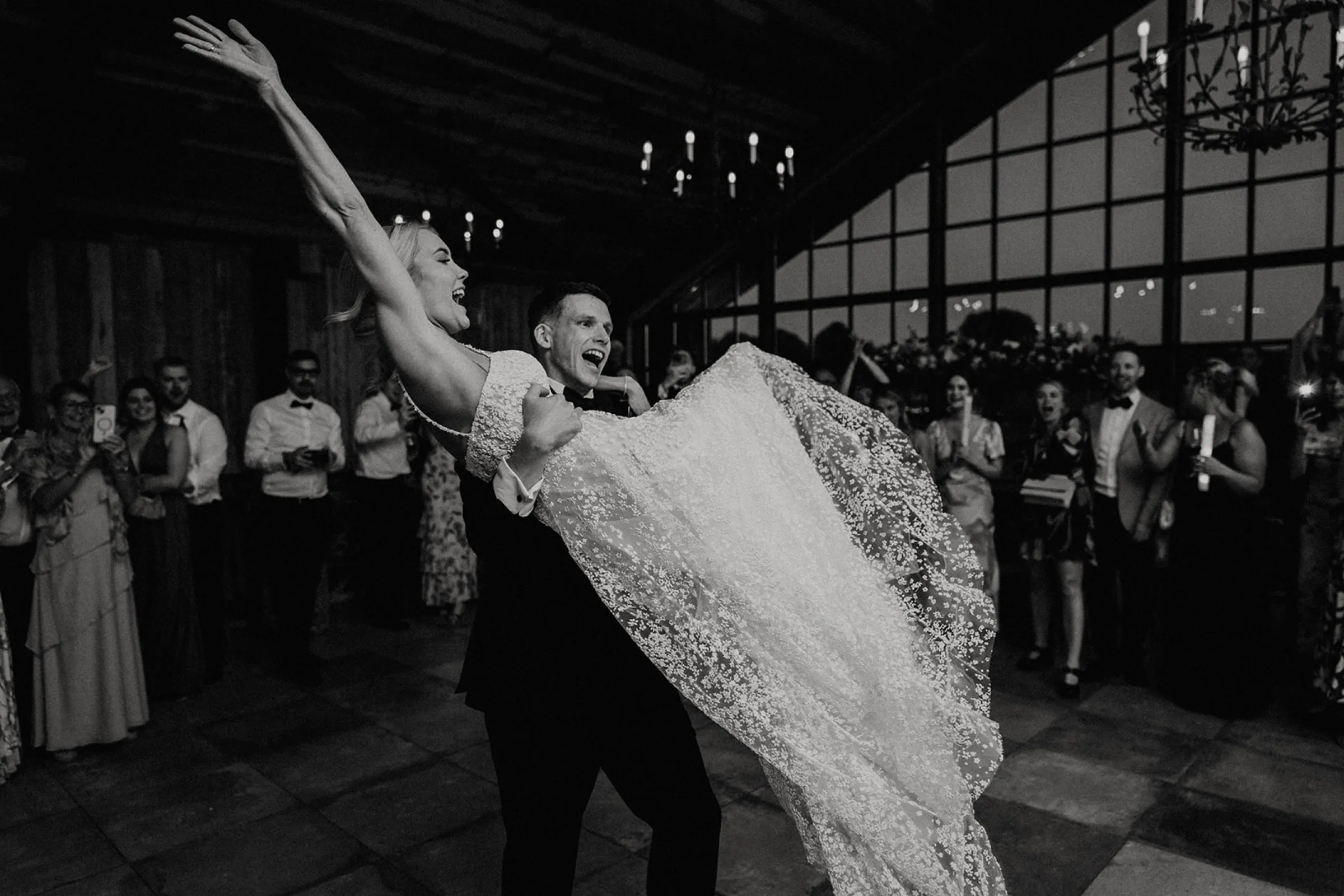
How couples want to remember their wedding is changing as fast as the wedding itself. The Knot lists editorial, cinematic photography as a 2027 trend, confirmed by all five of its vendor council. Bridebook sees nostalgia rising: film cameras, disposables and Polaroids on the tables.
The spending data is the clearest signal. In 2026, UK couples spent more on a videographer than on a photographer for the first time in Bridebook’s recent figures, with film spend up 9% in a single year.
15. Shorter engagements, busier summers
UK couples are planning faster. One in five now marries within 12 months of getting engaged, against a typical engagement of around 26 months, and four in five book a venue within a month of first contact.
There are more weekday weddings than you might think: 27% now take place Monday to Thursday, 17% on a Friday and 47% on a Saturday. But summer is getting busier, not quieter. May to August took 40% of bookings, up from 33% in 2024, with August the most popular month at 17%. Savills reports bookings for 2026 and 2027 already tracking ahead of the year before.
What it means for you. If you want a summer Saturday in 2027, the good suppliers are booking now. A Thursday or a September date gives you far more choice. Check my 2027 availability.
Where the forecasters disagree
Trend reports rarely admit they contradict each other. These do, and the disagreements are more useful than the agreements.
- Lace. The Knot has antique lace up 280% in the US. Bridebook’s UK verdict is that the lace gown has had its run, and UK searches for lace wedding dresses are down by almost half since 2022. My read: heirloom lace as a detail (a grandmother’s veil, a cuff, a ring cushion) works. The full lace gown is resting.
- Croquembouche. Bridebook has croquembouche searches climbing. TheWed says it’s on the way out. My read: the tower format is in. The croquembouche itself may already be peaking with the style set, while tiramisu has become the UK’s tower.
- Logos and monograms. The Knot reports “the wedding brand” (your own logo on everything) up 100%. TheWed lists logomania as finished, and The Wedding Edition’s panel talked about moving beyond monograms. My read: one subtle mark, not a merchandise range.
- Colour. TikTok says chartreuse and burgundy. UK search says butter yellow. Trust the search data.
Watch list: US trends that may cross the Atlantic
Silver replacing gold (US searches up 133%), swans and balletcore (up 106%), the Italian beach club look, prop surrealism and secret “hush-hush” honeymoons. None has strong UK evidence yet. If you love one, you’ll be early rather than late.
What’s on the way out in 2027
Sage green has had its moment: UK searches are down about 81% from their 2022 peak, and Bridebook now files it next to millennial mint. Naked cakes and lace gowns have roughly halved. Formal three-course wedding breakfasts are giving way to sharing feasts and food stations. TheWed adds curvy table layouts, giant tiered cakes, chrome coupes, calla lilies, beaded stem bouquets and cobalt blue to the departure lounge.
None of this means you can’t have them. It means that in ten years, they’ll date your photographs to the early 2020s. Whether that’s a problem is entirely up to you.
What will a wedding cost in 2027?
The average UK wedding cost £20,604 in 2026 according to Bridebook (about 7,000 couples) and £21,990 according to Hitched (2,020 newlyweds). The gap is down to who each survey asks and what it counts. Both exclude the engagement ring and honeymoon.
The bigger shift is where the money goes. Guest lists are shrinking, but spend per guest is rising: £278 a head on Bridebook’s figures, £272 and up 4% on Hitched’s.
Location matters too. Bridebook puts the 2026 average at £26,986 in London, £22,304 in the South West and £17,342 in the North West. If the last three years hold, expect the 2027 average to sit in the same £20,000 to £22,000 band, with the money moving from headcount to experience. That’s my projection, not a survey figure.
My view from behind the camera
Three predictions, with my confidence attached.
- Most likely to last (high confidence): the private wedding and the wedding weekend. Both are driven by maths and by how people want to spend time with the people they love, not by a colour chart. Structural trends stick.
- Most likely to date fastest (medium confidence): butter yellow everything. Colours of the year rarely survive two years at full strength. Sage green is the proof. Use it as an accent and you’ll love the pictures in 2040.
- The one couples will thank themselves for (high confidence): investing in the record of the day. If the phones are away and the guest list is small, your photographs and film are the whole archive. They’re also the only part of the budget that gets more valuable every year.
More questions about 2027 weddings
When should we book suppliers for a 2027 wedding?
For a summer Saturday in 2027, now. May to August took 40% of bookings in 2026, up from 33% in 2024, and August alone took 17%. Popular photographers, filmmakers and venues fill those dates first. Weekday and September dates give you far more choice.
Are humanist weddings legally binding in England in 2027?
Not yet. In England and Wales, humanist and celebrant ceremonies still need a separate legal ceremony. The government’s Tying the Knot consultation, which closed in September 2026, proposes making humanist weddings legally binding, but until the law changes, plan for the separate legal step. In Scotland they’ve been legal since 2005.
What is a wedding weekend?
A wedding weekend spreads the celebration over two or three days, usually welcome drinks the night before, the wedding day, and a brunch or relaxed day after. It’s the top pick of Bridebook’s 2027 Trend Council, and venues report more couples booking extra nights.
What is a dry hire wedding venue?
A dry hire venue rents you the space only. You bring in your own caterers, bar, furniture, lighting and staff. It gives more creative control and can cost less, but you need someone to coordinate the day. UK searches for dry hire venues rose 188% year on year in 2026.
What’s the difference between a venue coordinator and an on-the-day coordinator?
A venue coordinator works for the venue and looks after its side of the day: the rooms, its catering and its timings. An on-the-day coordinator works for you, confirming every supplier and running your whole day from start to finish. Dry hire venues usually have no coordinator, so you’ll need your own. Katrina Seear is an on-the-day wedding coordinator in Gloucestershire and the Cotswolds.
Is sage green still in for weddings in 2027?
Not really. UK searches for sage green weddings have fallen around 81% from their January 2022 peak. It still works as a soft accent, but the 2027 palette has moved to warmer tones such as butter yellow, terracotta and rust.
What is replacing the naked cake?
Dessert towers and retro celebration cakes. Tiramisu towers (Pinterest searches up 700%), profiterole pyramids, macaron stacks and croquembouche are replacing the naked cake, alongside maximalist cakes with sugar flowers. Naked cake searches have roughly halved since 2022.
Should we have an unplugged, phone-free ceremony?
If you want guests present rather than filming, yes. Phone-free ceremonies are part of the 2027 private wedding trend. Tell guests why on the invitation, have your celebrant remind them before you walk in, and share a professional gallery afterwards so nobody feels they missed out.
Sources
- Bridebook, Wedding Trends 2027: The Bridebook Trend Forecast, July 2026
- Bridebook, UK Wedding Report 2026 and average UK wedding cost 2026
- The Knot, 2027 Wedding Trends Report, September 2026, and press release
- The Wedding Edition, 2027 Wedding Trends Talk, September 2026
- Easy Weddings, Wedding trends to watch for 2027, October 2026
- TheWed, 13 wedding trends on their way out for 2027, April 2026
- Hitched, Wedding Industry Report: average cost £21,990, January 2026
- Savills, UK wedding venue research, May 2026
- Ministry of Justice, Tying the Knot: reforming weddings law in England and Wales, July 2026
Percentage changes marked as my calculation are worked out from the figures in the sources above. Where a source gave a range, I used the midpoint.